
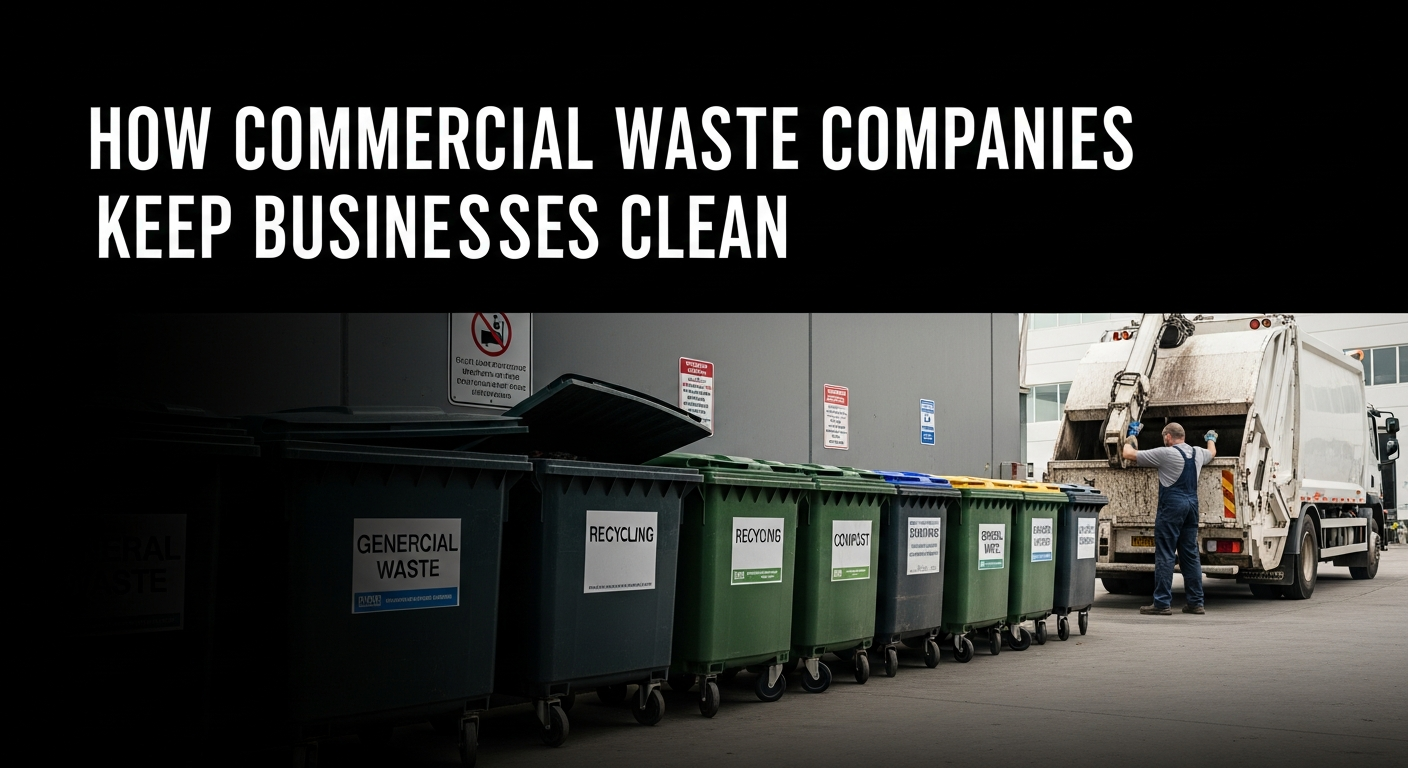
How Commercial Waste Companies Keep Businesses Clean

The Critical Infrastructure Behind Business Cleanliness

Every successful business relies on an intricate network of services that most customers never see. Among these invisible yet essential operations, commercial waste management stands as one of the most critical systems keeping modern enterprises functioning smoothly. Commercial waste companies don't simply collect trash—they orchestrate complex logistics operations that prevent health hazards, maintain regulatory compliance, and ensure that businesses can focus on their core operations without worrying about waste-related disruptions.

The scope of commercial waste management extends far beyond the traditional image of garbage trucks making routine pickups. These companies manage everything from hazardous medical waste at healthcare facilities to confidential document destruction for financial institutions, creating customized solutions that address the unique challenges each industry faces while maintaining the highest standards of safety and environmental responsibility.

Sophisticated Collection and Scheduling Systems

Modern commercial waste companies operate through highly sophisticated scheduling and routing systems that maximize efficiency while minimizing disruption to business operations. These systems utilize advanced GPS tracking, predictive analytics, and real-time communication networks to ensure that waste collection occurs precisely when and where it's needed most.

The scheduling process begins with detailed assessments of each client's waste generation patterns. Professional waste management consultants analyze factors such as business type, employee count, seasonal variations, and peak operational periods to develop customized collection schedules. For restaurants, this might mean multiple daily pickups during busy seasons, while office buildings might require different frequencies for general waste versus recycling materials.

Route optimization algorithms consider traffic patterns, fuel efficiency, and equipment capacity to create the most effective collection routes. This technological approach reduces costs for businesses while ensuring reliable service that prevents waste accumulation that could create unsanitary conditions or attract pests. Many companies now offer real-time tracking systems that allow business managers to monitor collection status and receive notifications when services are completed.

Specialized Equipment for Different Business Needs

Commercial waste companies maintain extensive fleets of specialized equipment designed to handle the diverse waste streams generated by different industries. This equipment goes far beyond standard garbage trucks, encompassing everything from compactor trucks for high-volume retail locations to specialized vehicles equipped with hydraulic lifts for heavy industrial waste.

For businesses generating large volumes of cardboard and packaging materials, commercial waste companies provide balers and compactors that reduce waste volume by up to 90%. These machines not only save space in dumpsters but also create revenue opportunities through recycling programs. Restaurants and food service establishments benefit from specialized grease trap cleaning equipment and organic waste collection systems that prevent drain blockages and reduce environmental impact.

Healthcare facilities require completely different equipment designed to handle biohazardous materials safely. This includes specially designed containers, vehicles with temperature controls, and tracking systems that maintain chain of custody documentation required by federal regulations. Construction sites need roll-off containers in various sizes, while office buildings benefit from secure document destruction vehicles that provide on-site shredding services.

Regulatory Compliance and Documentation Systems

One of the most valuable services commercial waste companies provide is ensuring businesses remain compliant with the complex web of local, state, and federal regulations governing waste disposal. These regulations vary significantly by industry and location, creating compliance challenges that can result in substantial fines and legal liability if not properly managed.

Commercial waste companies maintain dedicated compliance teams that stay current with changing regulations and help businesses navigate requirements such as hazardous waste manifests, recycling mandates, and disposal documentation. For healthcare facilities, this includes ensuring compliance with OSHA bloodborne pathogen standards and EPA medical waste regulations. Financial institutions must meet strict requirements for document destruction and data security.

The documentation systems maintained by professional waste companies create detailed audit trails that protect businesses during regulatory inspections. These systems track waste from generation through final disposal, providing certificates of destruction for confidential materials and proof of proper disposal for hazardous substances. Many companies now provide online portals where businesses can access real-time

reports, compliance documentation, and service histories.

Environmental Sustainability and Resource Recovery

Modern commercial waste companies have evolved into comprehensive resource recovery operations that help businesses achieve sustainability goals while reducing disposal costs. These programs go far beyond traditional recycling, encompassing everything from organic waste composting to energy recovery from non-recyclable materials.

Advanced sorting facilities use optical scanners, magnetic separators, and artificial intelligence to maximize material recovery rates. These facilities can process mixed waste streams and extract valuable materials that would otherwise end up in landfills. For businesses, this translates into reduced waste disposal costs and improved environmental performance metrics that increasingly matter to customers and stakeholders.

Many commercial waste companies now offer zero-waste-to-landfill programs that divert 90% or more of a business's waste stream from landfills through combination of recycling, composting, and waste-to-energy conversion. These programs require detailed waste audits and customized collection systems but can dramatically improve a company's environmental footprint while often reducing overall waste management costs.

Emergency Response and Contingency Planning

Commercial waste companies serve as critical partners during emergency situations that could otherwise shut down business operations. Whether dealing with natural disasters, equipment failures, or unexpected waste volume spikes, professional waste management companies maintain emergency response capabilities that keep businesses operational when standard systems fail.

Emergency response services include rapid deployment of additional containers, specialized cleanup equipment for spills or contamination events, and alternative disposal routes when primary facilities become unavailable. During the COVID-19 pandemic, many commercial waste companies quickly adapted their services to handle increased volumes of personal protective equipment and implemented enhanced safety protocols to protect both their workers and client facilities.

Contingency planning involves developing detailed backup procedures for various scenarios that could disrupt normal waste collection. This includes maintaining relationships with multiple disposal facilities, keeping emergency equipment reserves, and training staff to handle unusual situations. For critical facilities like hospitals or food processing plants, these contingency plans can mean the difference between continued operations and costly shutdowns.

Technology Integration and Smart Waste Solutions

The integration of Internet of Things (IoT) sensors, artificial intelligence, and data analytics has revolutionized how commercial waste companies monitor and optimize their services. Smart waste solutions provide real-time visibility into waste generation patterns, container fill levels, and collection efficiency metrics that enable proactive service adjustments.

IoT sensors installed in waste containers can detect fill levels, temperature changes, and even unauthorized access, sending alerts that prevent overflow situations and security breaches. This technology is particularly valuable for businesses with variable waste generation patterns or those located in areas where overflow could create significant problems.

Artificial intelligence algorithms analyze historical data to predict future waste generation patterns, enabling waste companies to adjust collection schedules proactively rather than reactively. This predictive approach reduces costs for businesses while improving service reliability. Advanced analytics also identify opportunities for waste reduction and recycling program improvements that can generate additional cost savings.

Partnership Approach to Long-Term Success

The most effective commercial waste companies function as strategic partners rather than simple service providers, working closely with businesses to develop comprehensive waste management strategies that support long-term operational goals. This partnership approach involves regular consultation, performance monitoring, and continuous improvement initiatives that adapt to changing business needs.

Professional waste management partners conduct regular waste audits to identify optimization opportunities, provide employee training on proper waste segregation procedures, and offer guidance on regulatory changes that could affect operations. They also help businesses evaluate the cost-effectiveness of different waste management options and implement programs that balance operational efficiency with environmental responsibility.

The value of this partnership approach becomes most apparent during periods of business growth or change. As companies expand operations, enter new markets, or modify their processes, experienced waste management partners can quickly adapt service levels and implement new solutions that support these transitions without creating operational disruptions or compliance risks.