
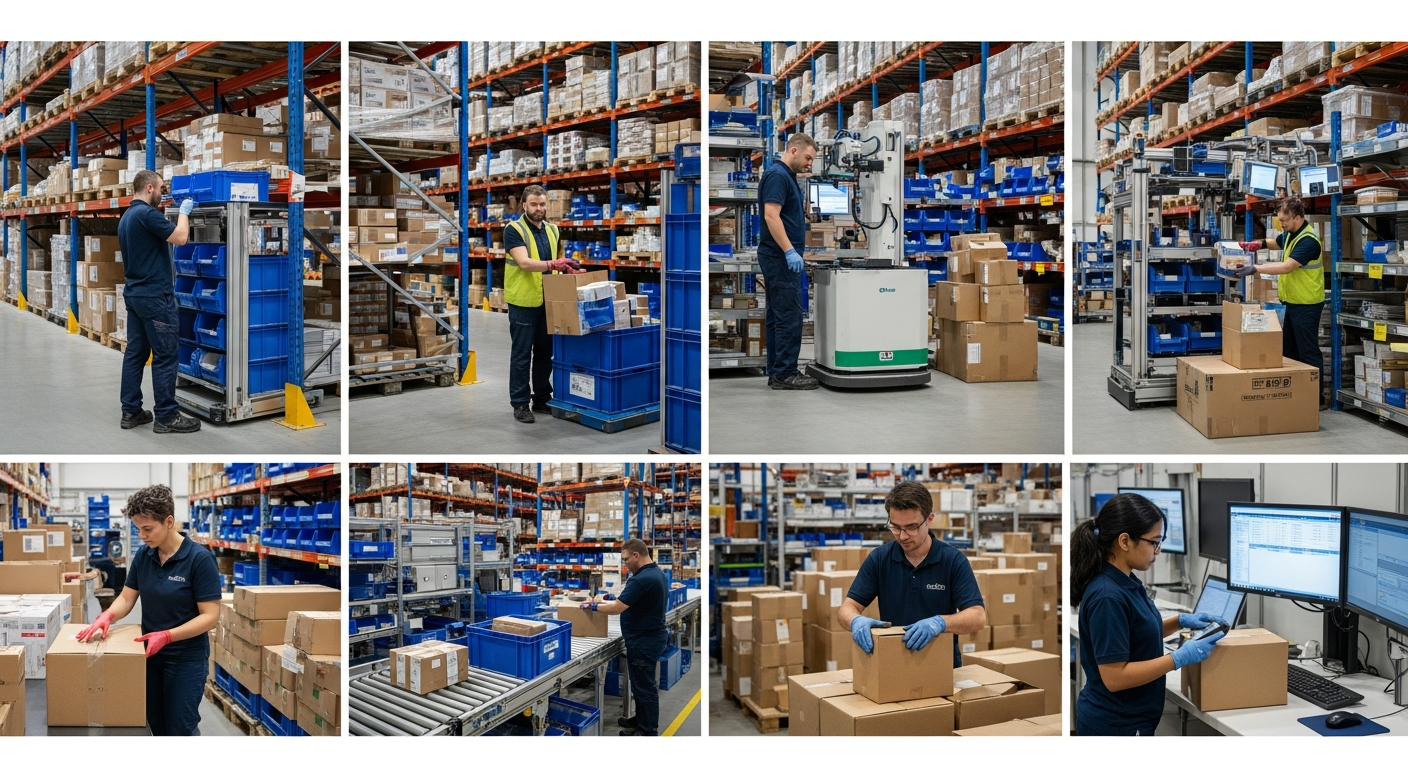
The Foundation of Modern Order Fulfillment
Picking and packing represents the heartbeat of modern commerce, transforming customer orders into carefully prepared shipments ready for delivery. These interconnected processes form the critical bridge between inventory storage and customer satisfaction, directly impacting everything from operational costs to delivery speed. Understanding how these systems work provides invaluable insight into the complex machinery that powers today's retail landscape.
At its core, picking involves retrieving specific items from warehouse locations based on customer orders, while packing focuses on preparing these items for safe, efficient shipment. However, the reality involves sophisticated coordination between human workers, automated systems, and carefully orchestrated workflows that must adapt to varying order volumes, product types, and delivery requirements.
The Picking Process: From Order to Item Retrieval
The picking process begins the moment a customer order enters the warehouse management system (WMS). This sophisticated software immediately analyzes the order, checking inventory availability, determining optimal picking routes, and generating detailed instructions for warehouse personnel. The system considers factors like item locations, picker proximity, order priority, and even the physical characteristics of products to create the most efficient retrieval strategy.
Modern warehouses employ several distinct picking methodologies, each optimized for different scenarios. Single-order picking, where one picker handles one complete order, works well for smaller operations or specialized products requiring careful handling. Batch picking allows workers to collect multiple orders simultaneously, dramatically improving efficiency for high-volume operations with similar products. Zone picking divides the warehouse into specific areas, with different workers handling items from their designated zones before orders are consolidated.
Wave picking represents perhaps the most sophisticated approach, where the WMS groups orders based on shipping schedules, carrier requirements, and operational capacity. This method ensures that picked items flow seamlessly into packing operations without creating bottlenecks or requiring excessive temporary storage.
Technology Integration in Modern Picking Operations
Contemporary picking operations leverage an impressive array of technologies to maximize accuracy and efficiency. Barcode scanning systems provide real-time verification of picked items, virtually eliminating selection errors while updating inventory counts instantaneously. Radio frequency identification (RFID) technology takes this further, enabling automatic item identification without direct scanning, particularly valuable for high-value or frequently moved products.
Voice-directed picking systems represent a significant advancement, providing hands-free operation through wireless headsets that guide workers through picking tasks using audio prompts. This technology allows pickers to maintain focus on their physical tasks while receiving precise instructions, resulting in improved accuracy rates and faster completion times.
Augmented reality (AR) picking solutions are emerging as game-changers, overlaying digital information onto workers' real-world view through smart glasses or mobile devices. These systems can highlight optimal paths through the warehouse, identify exact shelf locations, and even provide visual confirmation of correct items, reducing training time for new employees while boosting overall productivity.
The Art and Science of Effective Packing
Packing transforms picked items into protected, efficiently sized packages ready for shipment. This process requires balancing multiple competing priorities: minimizing packaging materials and shipping costs, ensuring product protection during transit, meeting carrier requirements, and maintaining brand presentation standards. Successful packing operations develop systematic approaches that address each of these concerns consistently.
Package sizing represents a critical decision point that significantly impacts shipping costs and environmental sustainability. Advanced packing systems use dimensional weight calculations to determine optimal box sizes, considering both the physical dimensions and weight of items. Some operations employ automated packaging systems that can adjust box sizes dynamically, creating custom-fitted packages that minimize void space while ensuring adequate protection.
Material selection involves choosing appropriate cushioning, void fill, and protective materials based on product characteristics and shipping conditions. Fragile electronics require different protection than clothing or books, and international shipments face different handling stresses than domestic deliveries. Experienced packing operations maintain detailed guidelines for material usage while empow