
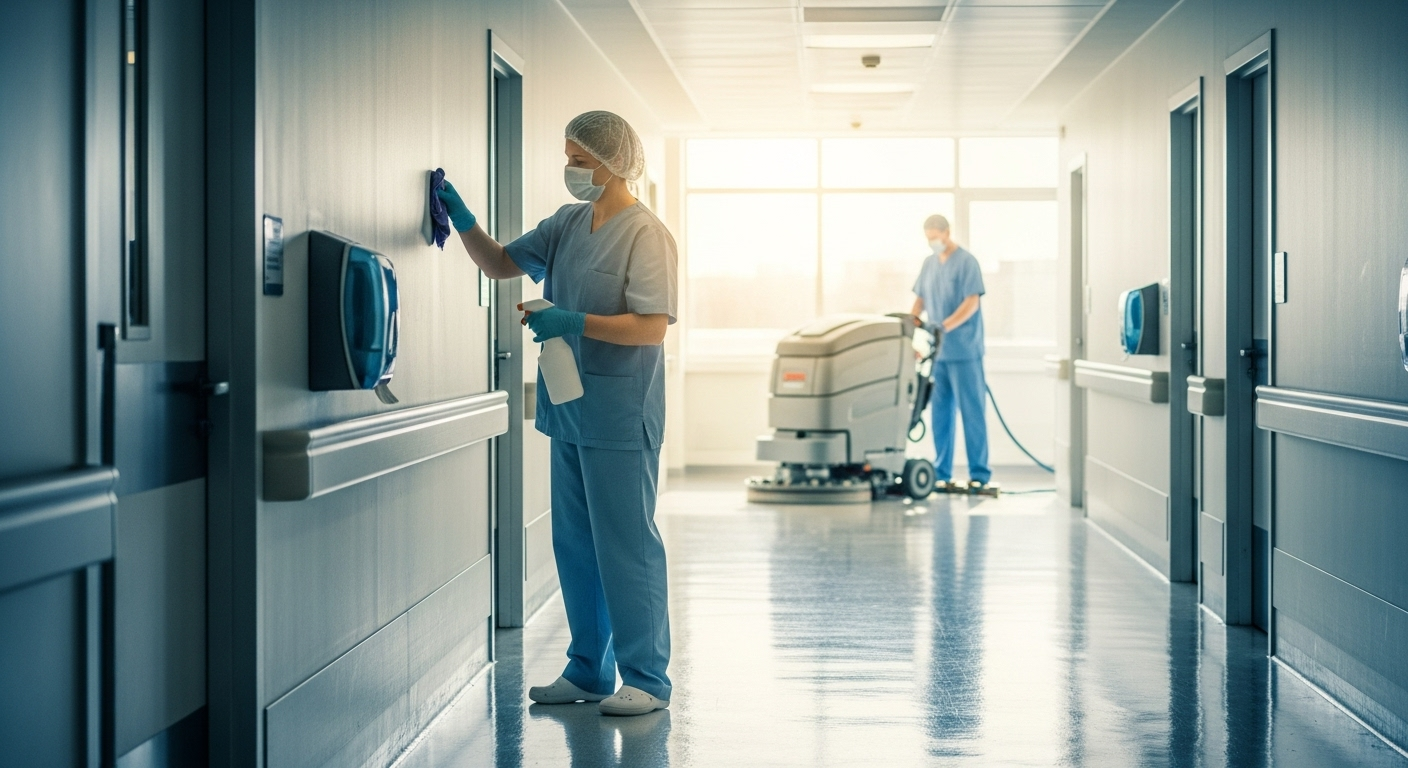
Did you know that the cleanliness of hospitals significantly impacts patient recovery? Hospital cleaning is one of the most important services in healthcare facilities, directly affecting patient safety, infection control, and overall hospital reputation. Behind the scenes, hospital cleaners play a vital role in maintaining hygiene, preventing infections, and supporting the recovery process of patients.
The Importance of Hospital Cleaning Services
Hospital cleaning services are essential for keeping medical environments safe. Studies show that proper cleaning can reduce hospital-acquired infections by up to 30%. Hospital cleaners are responsible for disinfecting surfaces, managing waste, and ensuring patient rooms, operating theaters, and waiting areas are clean and safe. Their work not only protects patients but also reassures families and visitors, creating a welcoming environment within the hospital.
Skills Every Hospital Cleaner Needs
Working in hospital cleaning requires specialized skills. Hospital cleaners must have strong attention to detail, as missing even a small area can lead to serious health risks. Training programs cover infection control, correct use of cleaning products, handling hazardous materials, and the use of personal protective equipment (PPE). Many hospitals provide on-the-job training, while additional certifications can help staff improve their hospital cleaning salaries and job prospects. For those looking to enter the industry, part-time hospital cleaning work can provide flexible opportunities while still contributing to vital healthcare services.
Challenges in Hospital Cleaning Jobs
Hospital cleaning is not without challenges. The work can be physically demanding, requiring cleaners to stand for long hours, lift heavy objects, and move quickly through busy hospital wards. The emotional environment can also be difficult, as hospital cleaners often work near patients in critical condition. At times, they may face interactions with stressed or grieving families. This is why professionalism, compassion, and good communication skills are essential for success in hospital cleaning roles.
>How Hospital Cleaning Improves Patient Outcomes
The impact of hospital cleaning goes far beyond appearance. A clean medical environment directly improves patient outcomes by lowering infection risks, speeding up recovery times, and reducing hospital stays. Visitors and staff also benefit from a safe and hygienic environment, which fosters trust and reflects positively on the hospital’s reputation. Cleanliness is often one of the most noticeable factors for patients and families, making hospital cleaning services a key part of overall healthcare quality.
Career Growth and Hospital Cleaning Salaries
When it comes to career opportunities, hospital cleaning offers more than many expect. Entry-level positions provide stable employment and competitive hospital cleaning salaries, with room for growth. Many hospital cleaners move into supervisory or management positions, overseeing cleaning teams or focusing on infection control and quality assurance. With additional training, cleaners can expand into related areas such as environmental services management or healthcare administration. For those who prefer flexibility, part-time hospital cleaning work remains an excellent option, especially for individuals balancing other responsibilities.
The Future of Hospital Cleaning Work
The demand for skilled hospital cleaners continues to grow as healthcare facilities place more emphasis on high hygiene standards. Hospitals know that effective cleaning services are critical to patient safety and staff health. Whether starting with part-time hospital cleaning work or pursuing a full-time career, this field offers rewarding opportunities and plays a central role in healthcare delivery.
Final Thoughts on Hospital Cleaning Services
Hospital cleaning is more than just a support service—it is a frontline defense in protecting patients and ensuring safe healthcare environments. With strong demand, competitive hospital cleaning salaries, and opportunities for advancement, hospital cleaners are essential members of the healthcare team, making a meaningful difference every day.
The impact of hospital cleaning goes far beyond appearance. A clean medical environment directly improves patient outcomes by lowering infection risks, speeding up recovery times, and reducing hospital stays. Visitors and staff also benefit from a safe and hygienic environment, which fosters trust and reflects positively on the hospital’s reputation. Cleanliness is often one of the most noticeable factors for patients and families, making hospital cleaning services a key part of overall healthcare quality.
Career Growth and Hospital Cleaning Salaries
When it comes to career opportunities, hospital cleaning offers more than many expect. Entry-level positions provide stable employment and competitive hospital cleaning salaries, with room for growth. Many hospital cleaners move into supervisory or management positions, overseeing cleaning teams or focusing on infection control and quality assurance. With additional training, cleaners can expand into related areas such as environmental services management or healthcare administration. For those who prefer flexibility, part-time hospital cleaning work remains an excellent option, especially for individuals balancing other responsibilities.
The Future of Hospital Cleaning Work
The demand for skilled hospital cleaners continues to grow as healthcare facilities place more emphasis on high hygiene standards. Hospitals know that effective cleaning services are critical to patient safety and staff health. Whether starting with part-time hospital cleaning work or pursuing a full-time career, this field offers rewarding opportunities and plays a central role in healthcare delivery.
Final Thoughts on Hospital Cleaning Services
Hospital cleaning is more than just a support service—it is a frontline defense in protecting patients and ensuring safe healthcare environments. With strong demand, competitive hospital cleaning salaries, and opportunities for advancement, hospital cleaners are essential members of the healthcare team, making a meaningful difference every day.