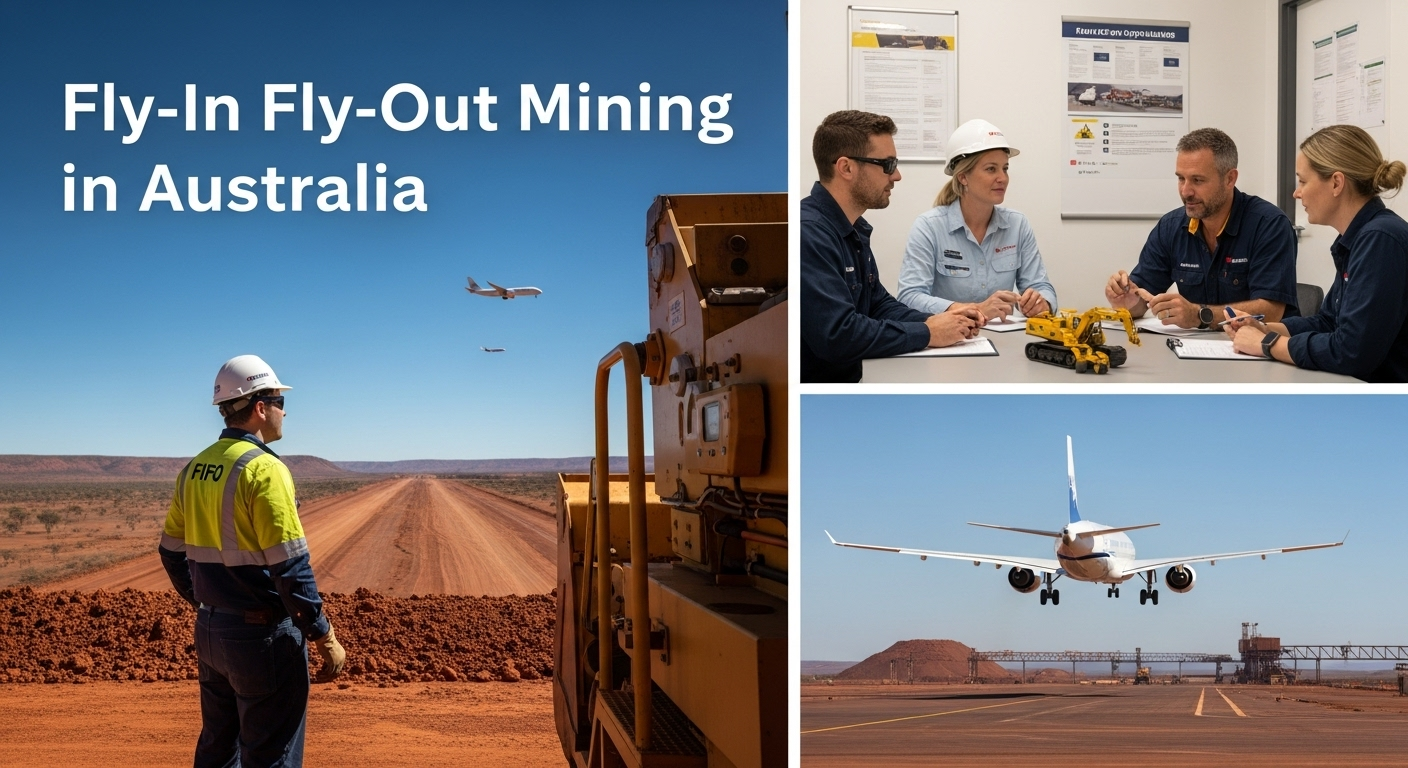
Australia’s mining industry offers a wide range of FIFO (fly-in fly-out) jobs, supporting major operations across Western Australia, Queensland, Northern Territory, and South Australia. Companies like BHP, Rio Tinto, and Fortescue Metals Group regularly recruit for mining jobs in Australia, including entry-level FIFO jobs in support and maintenance roles.
Some Australian companies hiring overseas workers do offer mining jobs in Australia with visa sponsorship, mainly for skilled trades and technical positions. However, FIFO jobs with no experience are typically available only to those already living in Australia. Foreign applicants should focus on FIFO mining jobs for foreigners that match their qualifications and visa eligibility.
To explore opportunities or learn how to apply for FIFO jobs in Australia, visit company career pages or specialized mining recruitment agencies.
FIFO Job Categories and Opportunities
Mining operations encompass numerous job categories suitable for various skill levels and backgrounds. Entry-level positions include general laborers, cleaners, kitchen hands, and warehouse assistants, requiring minimal prior experience but offering excellent training opportunities and career progression pathways. These roles typically start at $70,000-$90,000 annually, with overtime and allowances significantly increasing total compensation.
Skilled trades represent the largest employment category, including electricians, fitters, welders, diesel mechanics, and heavy equipment operators. These positions command salaries ranging from $100,000-$150,000 annually, with experienced professionals earning substantially more. Technical roles such as mine surveyors, geologists, engineers, and safety coordinators offer the highest compensation packages, often exceeding $150,000-$250,000 annually.
Support services create additional opportunities in catering, accommodation management, security, medical services, and administration. These roles provide stable employment for individuals seeking mining industry exposure without direct operational involvement. Many companies also employ bus drivers, aircraft ground crew, and logistics coordinators to support FIFO transportation networks.
Visa Sponsorship and Immigration Pathways
International workers can access Australian mining employment through several visa categories, with many companies offering sponsorship for qualified candidates. The Temporary Skill Shortage (TSS) visa (subclass 482) provides the most common pathway, allowing employers to sponsor overseas workers for up to four years in eligible occupations. Mining-related occupations frequently appear on the Medium and Long-term Strategic Skills List (MLTSSL), making visa approval more straightforward.
The Employer Nomination Scheme (ENS) visa (subclass 186) offers permanent residency pathways for experienced professionals, while the Regional Sponsored Migration Scheme (RSMS) provides opportunities in regional mining areas. Working Holiday visa holders from eligible countries can access entry-level mining positions, though restrictions limit employment duration with individual employers.
Skilled migration programs, including the Skilled Independent visa (subclass 189) and Skilled Nominated visa (subclass 190), allow qualified professionals to migrate independently and subsequently seek mining employment. Engineering, geology, and specialized trade qualifications receive priority processing, reflecting industry demand for these skills.
Application Process and Requirements
Securing FIFO mining employment requires strategic preparation and understanding of industry-specific requirements. The application process typically begins with online job portals such as Seek, Indeed, and specialized mining recruitment websites like Mining People International and Hays Mining. Direct applications through company websites often yield better results, particularly for major operators with established recruitment processes.
Essential requirements include valid identification, relevant qualifications or trade certificates, medical fitness assessments, and police clearances. Most positions require completion of mandatory safety training, including General Construction Induction (White Card), Working at Heights, and First Aid certificates. Many companies provide this training upon employment, but having certifications demonstrates commitment and can accelerate the hiring process.
The recruitment process involves multiple stages: initial application screening, phone interviews, competency assessments, medical examinations, and final interviews. Companies prioritize candidates with positive attitudes
, strong work ethics, and ability to work effectively in team environments under challenging conditions. Previous mining experience, while advantageous, is not always mandatory for entry-level positions.
Roster Patterns and Lifestyle Considerations
FIFO rosters vary significantly depending on company policies, operational requirements, and worker preferences. Common patterns include 2:1 (two weeks on, one week off), 8:6 (eight days on, six days off), 4:3 (four days on, three days off), and extended rosters like 3:1 or 4:2. Longer rotations typically offer higher daily rates but require greater commitment to extended periods away from home.
The FIFO lifestyle demands significant personal adjustments, particularly regarding family relationships, social commitments, and personal routines. Workers must adapt to shared accommodation, communal dining, limited privacy, and restricted recreational activities during work periods. However, extended time off allows for travel, family time, and personal pursuits impossible with traditional employment arrangements.
Successful FIFO workers develop coping strategies including maintaining regular communication with family, establishing site-based friendships, pursuing hobbies or study during downtime, and maximizing time-off periods. Many workers use extended breaks for international travel, property investment activities, or additional education and training.
Compensation and Benefits Structure
FIFO mining positions offer exceptional compensation packages extending beyond base salaries. Most roles include accommodation, meals, transportation to and from work sites, and comprehensive insurance coverage. Overtime rates, typically 1.5x or 2x normal rates, significantly boost total earnings, with many workers doubling their base salaries through additional hours.
Site allowances compensate for remote location challenges, ranging from $50-$200 daily depending on site isolation and conditions. Many companies provide end-of-contract bonuses, retention payments, and performance incentives. Superannuation contributions, often exceeding mandatory minimums, support long-term financial security.
Additional benefits may include health and dental coverage, income protection insurance, professional development opportunities, and family support services. Some companies offer share purchase plans, salary sacrifice arrangements, and financial planning services to help workers maximize earning potential and plan for post-mining careers.
Career Progression and Long-term Opportunities
The mining industry provides excellent career advancement opportunities for dedicated workers willing to develop skills and take on additional responsibilities. Entry-level workers can progress to supervisory roles, specialized technical positions, or management functions through experience and additional training. Many companies offer internal promotion preferences, apprenticeship programs, and educational support for career development.
Professional development opportunities include leadership training, technical certifications, and university degree support through company-sponsored programs. Workers often transition between operational roles, gaining diverse experience across different mining processes and equipment types. This broad exposure creates opportunities for consulting work, training roles, or starting specialized service businesses.
Long-term career planning should consider industry cycles, technological changes, and personal goals. Many successful mining professionals leverage their experience to establish businesses, transition to corporate roles, or pursue international opportunities in emerging mining regions. The skills and financial resources gained through FIFO employment provide excellent foundations for diverse post-mining career paths.
Preparing for Success in FIFO Mining
Success in FIFO mining requires careful preparation, realistic expectations, and commitment to personal and professional development. Prospective workers should research specific companies, understand roster requirements, and prepare financially for initial periods without income during recruitment and training phases. Building relevant skills through vocational training, obtaining safety certifications, and maintaining physical fitness improve employment prospects.
Networking within the mining community through professional associations, online forums, and industry events can provide valuable insights and job opportunities. Many positions are filled through referrals and internal recommendations, making relationship building crucial for career advancement. Maintaining professional relationships with colleagues, supervisors, and recruitment consultants creates ongoing opportunities throughout mining careers.
Mental and physical preparation for the FIFO lifestyle includes developing stress management techniques, maintaining fitness routines, and establishing support networks. Understanding the challenges and rewards of remote work helps set realistic expectations and develop coping strategies for successful long-term employment in Australia's dynamic mining industry.